OD&D [Ocean D&D] - Surface Reflections
Last Sunday I ran the first session of OD&D (Ocean D&D). I advertised it as a test session and warned players that there might be things to work out in the moment.
The party consisted of:
- Mantle-of-Cloud (Axolotl) - FelineAvian
- Amby (Axolotl) - Kirko
- Magnifico (Hermit Crab) - Weird Writer
- Creel Crusher (Stomatopod) - Arkbrik
- Crabraham Lincoln (hermit crab), later Blubbub/Octo-Potato (Octopod) - Princess Pizzabones
I consider the session a success. Arkbrik and FelineAvian have written fantastic play reports that you should go read instead of this post.
I don't have much to say except some thoughts.
The players immediately got the assignment and matched the tone I was going for without me saying anything about it. While I like to have some silliness in all of my gaming, OD&D, in my mind, is supposed to be somber and awesome (in the original meaning of the term) just as much. What fascinates me about the underwater world is its beauty, mystery, and tranquility.
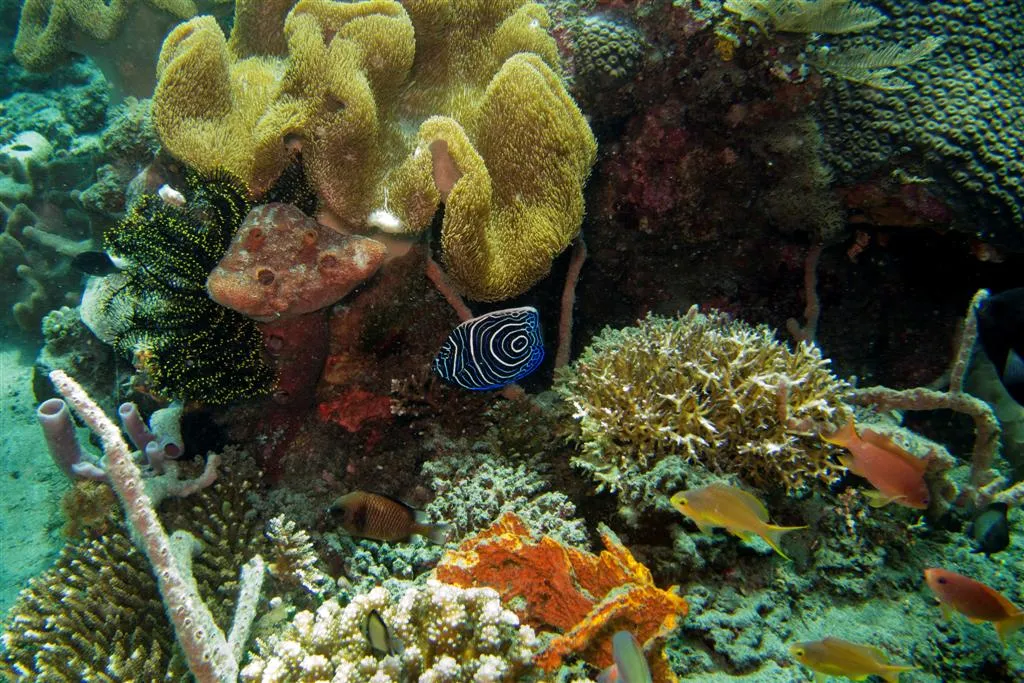
Initially I considered posting a note on tone with my LFG post but then decided against this and to just trust the table to find its way, which it very much did. During play I tried to support this naturalist approach by setting the scene using pictures of the reef and ocean creatures. It also helped because describing animals from the perspective of animals isn't easy. (For example, try thinking of the word for a Triton Snail's feelers on the fly. They are probably just called feelers, but you get the point.)
D&D has a lot of naturalism in its DNA. It's something we often discuss with regards to the problematic forms this takes in E.G.G.'s vision. My initial impression is that OD&D might be an interesting way to reframe this naturalism. By playing ocean creatures, the differences and hierarchies between species of sea life do not come with the associations of Gygaxian race science. It's a lot easier because the taxonomy of species is not one we find problematic.1 Cuttlefish can be evil bastards without them explicitly or implicitly standing for a cultural or racial 'Other.' Compare this to a setting where humanoid people like Orcs are ontologically determined, be it evil or good. There the baggage that comes with our histories, the way we were taught to think and feel about those we consider monstrous, can't be discarded easily. Even when we make an effort to invert or subvert tropes, the implications remain present though negated.
This isn't surprising but I find it interesting nonetheless. It's also not a moral argument I am trying to make. It's just something that came to mind thinking about OD&D.

Conceptual thinking is not without problems; the opposite is the case, but this goes beyond a post about playing elf games. Conceptualization is a process of identification of concept and object. Therein that which is itself not concept is truncated, subjugated. There is no way out but through, to salvage the nonidentical within the means of the concept.↩